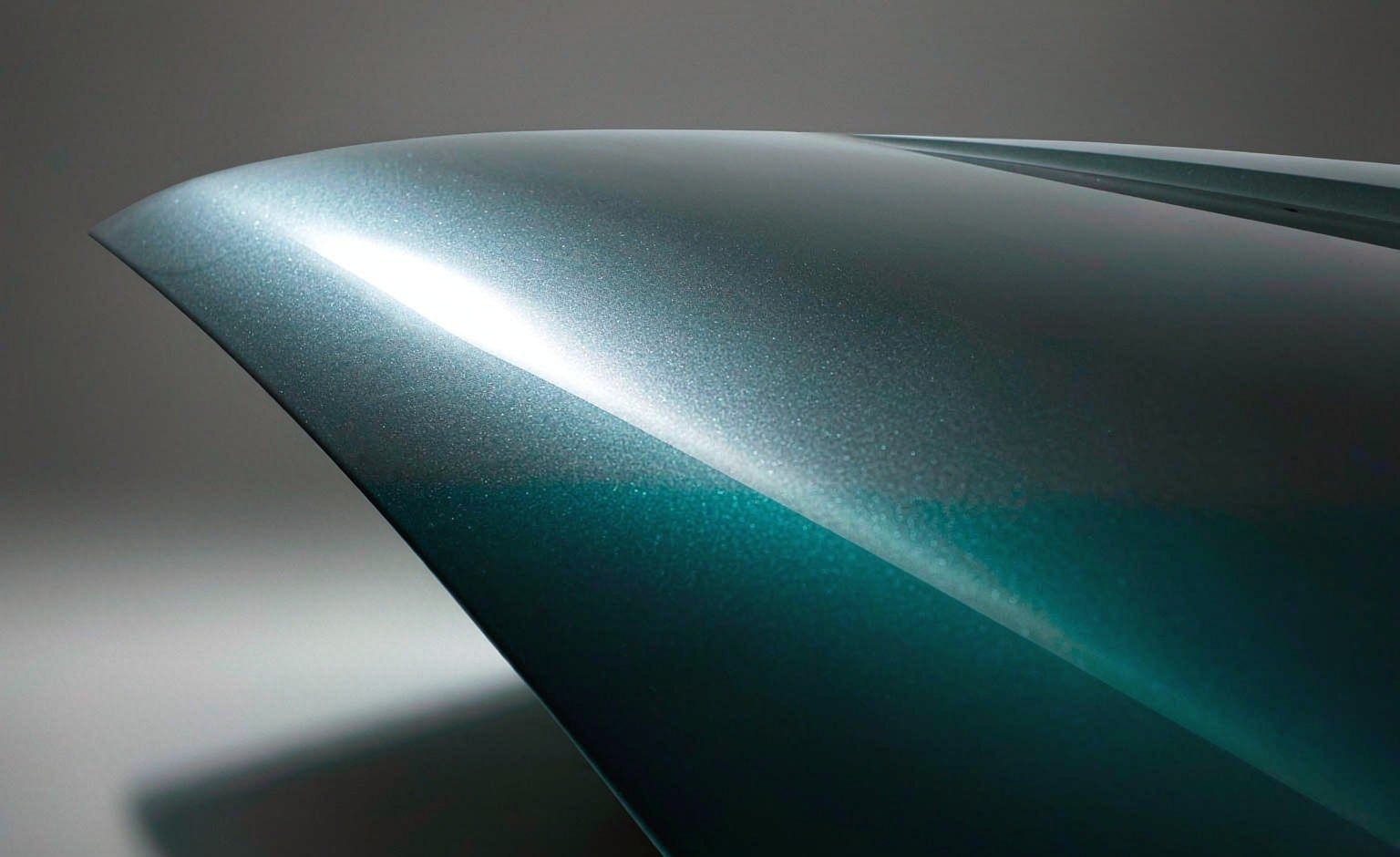
Effect pigments for automotive and industrial coatings must survive months of UV, heat and weathering. Specify performance for both the production line and the service environment — that separation is what distinguishes a showroom finish from a field failure. Grade and particle size drive orientation, sparkle and durability.
In coatings, the pigment is only as good as its performance after months of UV, heat and weathering. Specifying for the production line and the service environment is what separates a showroom finish from a field failure.
| Lever | What to ask for |
|---|---|
| Lightfastness | Blue-wool rating (ISO 105-B02) or equivalent; higher = slower fade |
| Weathering | Accelerated test evidence (ASTM G154/G155, ISO 4892-3) — QUV / xenon hours survived |
| Substrate & process fit | Compatibility with your resin, cure and line temperature |
Q: Why does my pearl look different on the line vs the sample?A: Film thickness, orientation and clearcoat all shift the read. Lock the application window (wet film, flash-off, cure) in the spec, not just the pigment.
Q: Is higher lightfastness always worth it?A: For exterior and UV-exposed parts, yes. For protected interior components, a lower-rated grade can meet life without the cost premium.