EFFECT-PIGMENT is a GMP-certified pearlescent pigment manufacturer and global supplier, producing mica- and glass-based pearl powders, glitter and effect pigments since 2003. We serve 100+ countries with FDA / Kosher / ISO 9001 / GMP certified products and OEM, ODM and OBM support.
Last updated: 2026-11-04
Packaging complies with Regulation (EU) 2025/40 (PPWR) - verified by SGS testing. Contact us for a copy of the report.
Buyers rarely fail because the powder looks wrong in a photograph. They fail because the grade, the batch or the paperwork does not match what was promised. These are the six checks we recommend before a first order — with any supplier, including us.
Ask whether the mica or glass flake is coated in-house. A supplier that only repacks has no control over coating thickness, and coating thickness is what sets lustre and batch consistency. We coat our own substrate in the GMP workshop.
Cosmetic, food-contact and industrial pearlescent pigments are not interchangeable, even when two swatches look identical. A supplier should be able to say which line each SKU belongs to — and decline to quote a cosmetic enquiry against an industrial grade.
Ask which instrument the colour is measured on and what tolerance applies. An uncontrolled batch drifts visibly once two lots sit side by side in the same production run. Get the tolerance figure in writing before the first order, not after the first complaint.
COA, TDS and SDS should travel with the pallet, not arrive three weeks later on request. For EU-bound cosmetics or food-contact use, the packaging and substance declarations matter as much as the pigment itself.
A 500 kg minimum makes a first evaluation impossible for a small brand. Stock items from 1 kg and free 5–10 g samples let you judge the effect before committing to a production quantity.
Every drum should carry a batch number that leads back to a production date and a retained sample. Without that trail, a complaint six months later cannot be investigated — only argued about.
Six product families, all produced in our GMP workshop and certified to FDA / Kosher / ISO 9001.
E171-free edible pearl pigments for cake decorating, confectionery, beverages and food packaging.
Browse family →
Glass flakes coated with pure silver for a brilliant metallic lustre across eight grades.
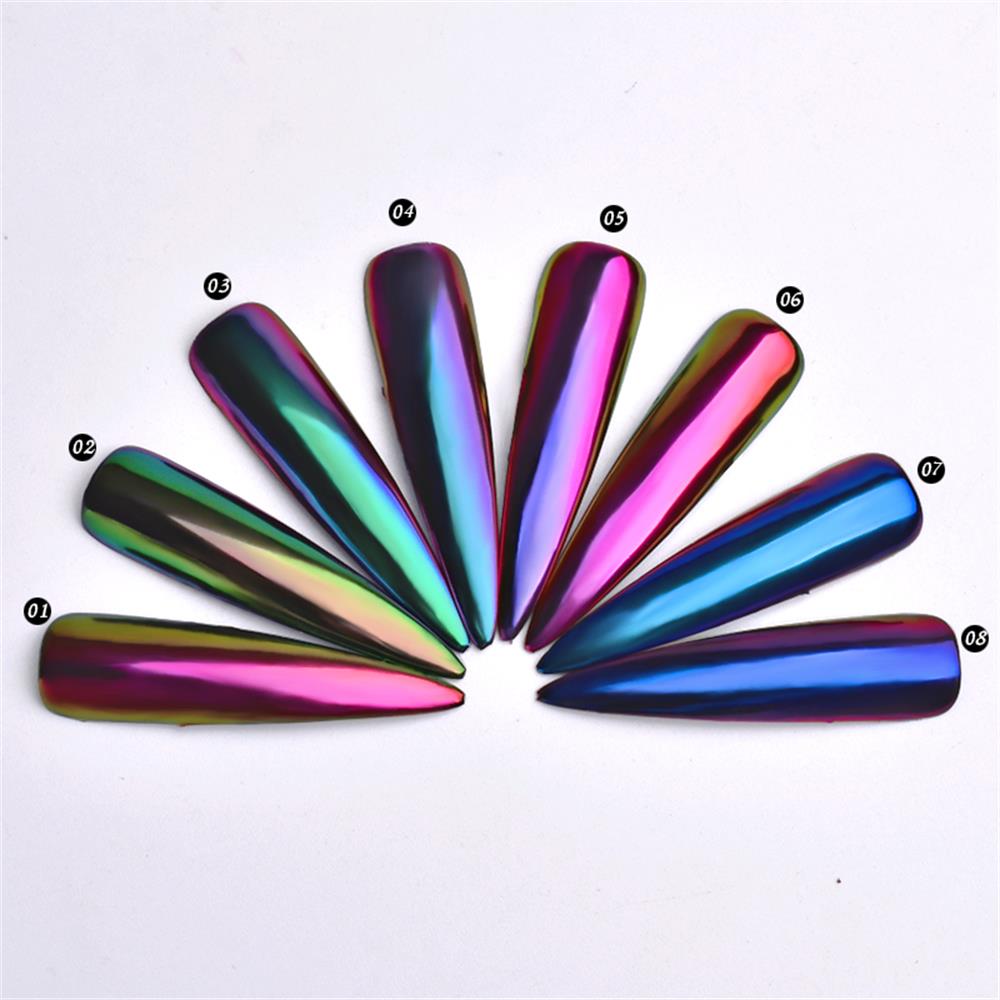
Browse family →Iridescent mica powders for eyeshadow, nail art, lip products and cosmetics.
Browse family →
Color-shifting pigments that change with viewing angle, ideal for coatings and automotive effects.
Browse family →
Pearl pigments for art, crafts, printing inks and decorative coatings.
Browse family →
Thermochromic, photochromic, glow and color-changing effect pigments.
Browse family →Figures below apply to our standard pearlescent range. Custom matching can move particle size and packing within these families.
| Parameter | Standard range |
|---|---|
| Base material | Mica · synthetic mica · borosilicate glass flake |
| Particle size (D50) | Fine 1–15 µm · Medium 10–60 µm · Coarse 40–200 µm · Cosmetic 10–125 µm |
| Appearance | Silver-white base, interference colours and metallic shades |
| TiO₂ content | TiO₂-coated and TiO₂-free grades both available |
| MOQ | 1 kg for stock items · custom shades from 5 kg |
| Samples | Free 5–10 g, dispatched within 3 working days |
| Lead time | About 7 days after colour confirmation |
| Packing | 5 g bags to 25 kg drums, private-label labelling available |
| Certification | FDA · Kosher · ISO 9001 · GMP workshop |
| Customisation | OEM / ODM / OBM, colour matching to a customer reference |
Particle size decides how the pigment reads at arm's length: a smooth sheen, a visible sparkle, or a pronounced metallic flake.
Smooth, low-sparkle lustre. Chosen where surface smoothness outweighs glitter: pressed powders, liquid foundation, printing inks and thin film coatings. Fine grades also stay suspended longer in low-viscosity systems.
The workhorse range. Visible sparkle without a coarse hand-feel, which is why most eyeshadow, nail, plastic and general industrial coating work sits here.
A strong metallic face and a pronounced flake effect. Used in automotive refinish, exterior coatings and decorative finishes where the flake has to be visible at a distance. Coarse grades settle faster and need more attention to dispersion.
Four checkpoints stand between the raw mica and the drum that reaches your line.
Mica and glass flake are checked for particle size distribution and whiteness before any coating takes place.
Coating thickness is monitored during production, because that thickness — not the substrate — produces the interference colour.
Colour is measured against the retained standard. A batch is released only when it falls inside the agreed tolerance.
A sample of every batch is kept on file, so a question about a delivery can be answered with the actual powder instead of a recollection.
Stock shades ship from ready inventory. Custom shades are matched to your reference and produced to order.
Production typically runs about seven days after colour confirmation. Pigment is packed from 5 g sample bags up to 25 kg drums, and private-label labelling is available for OEM orders. Export documentation — COA, TDS, SDS and the commercial invoice set — is prepared for each shipment rather than assembled afterwards.
For EU destinations we can supply the packaging statement: our packaging has passed SGS testing against Regulation (EU) 2025/40 (PPWR). We do not claim environmental certifications we do not hold.
A manufacturer, not just a trader — full control over formulation, quality and supply.
Production in GMP-standard workshops with ISO 9001 quality management and full batch traceability.
Every product line is backed by four certifications; we do not add or imply any others.
Decades of private-label and custom-formulation experience for global brands.
10,000+ colors and SKUs in ready stock, shipped to 100+ countries with Trade Assurance support.
Common questions from buyers about this product. Click to expand answers.
Pearlescent pigment is a substrate — usually mica, synthetic mica or glass flake — coated with a thin metal oxide layer. The coating thickness, not the substrate colour, produces the pearl effect. A supplier's real job is to control that coating consistently from batch to batch, and to declare which substrate and coating each SKU uses.
Fine grades (1–15 µm) give a smooth sheen and suit pressed powders, inks and thin coatings. Medium grades (10–60 µm) give a visible sparkle and cover most cosmetics, nail and plastic work. Coarse grades (40–200 µm) give a pronounced metallic flake for automotive and exterior coatings.
1 kg for stock shades, with a few items available from 10 g. Custom colour matching starts from 5 kg. Free 5–10 g samples ship within three working days.
About seven days after colour confirmation for custom shades. Stock items ship from inventory, so the lead time is mostly transit.
Yes. Cosmetic grade runs from 10–125 µm, and food grade is E171-free. Both are produced in the GMP workshop. We hold FDA, Kosher, ISO 9001 and GMP; we do not add or imply certifications we do not hold.
Yes. That covers colour matching to a customer reference, private-label packing and shade development, alongside OBM work. Tell us the target effect and the application, and we will propose a grade.
Request a free sample or a quote, and talk to our team about OEM, ODM and custom formulations.